By Vishope Foundation | March 04, 2025
At Vishope Foundation, we believe that every girl deserves the opportunity to pursue her dreams without the barriers imposed by poverty, stigma, or lack of access to basic necessities. In the rural communities of Oyam District, Northern Uganda, adolescent girls face a silent yet pervasive challenge: limited access to sanitary napkins during menstruation. This gap not only affects their health and dignity but also their education, often forcing them to miss school or drop out entirely. As a charity-oriented NGO committed to sustainable social impact, Vishope Foundation is proud to launch an initiative to supply sanitary napkins to school girls in Oyam District, combining innovative solutions with a scalable model to empower the next generation.
The Challenge: Period Poverty in Oyam District
Oyam District, nestled in Uganda’s northern region, is a vibrant rural community rich in culture but burdened by economic and infrastructural challenges. For many families here, daily survival takes precedence over what might be considered “luxuries” in more urbanized areas—sanitary napkins included. With limited disposable income, girls and women often resort to using makeshift solutions like old rags, torn old matrasses, or even maize husks during their menstrual cycles. These alternatives are not only unhygienic but also increase the risk of infections, undermining their health and well-being.
The consequences extend far beyond physical discomfort. Studies across sub-Saharan Africa show that girls miss an average of 3-5 school days per month during menstruation due to inadequate menstrual hygiene resources. In Oyam, this translates to lost classroom time, diminished academic performance, and, in many cases, complete withdrawal from education. The stigma surrounding menstruation further compounds the issue, as girls feel ashamed to discuss their needs or seek help. For Vishope Foundation, this is not just a health issue—it’s an economic and social justice issue that demands a strategic, sustainable response.
Our Mission: Bridging the Gap with Purpose
Vishope Foundation operates at the intersection of social good and business innovation. Our mission is to create lasting change by addressing systemic challenges with solutions that are scalable, cost-effective, and community-driven. In Oyam District, our Sanitary Napkins Supply Initiative aims to provide school girls with free, high-quality sanitary napkins while fostering awareness, dignity, and educational continuity. But this isn’t just about handouts—it’s about building a model that empowers communities, engages local stakeholders, and lays the groundwork for self-sufficiency.
Our target? To reach 5,000 school girls across 20 rural schools in Oyam District within the first year, ensuring they have consistent access to sanitary napkins and the knowledge to manage their menstrual health. By doing so, we aim to reduce absenteeism, boost confidence, and unlock their potential to thrive academically and beyond.
The Charity-NGO Approach: A Blueprint for Impact
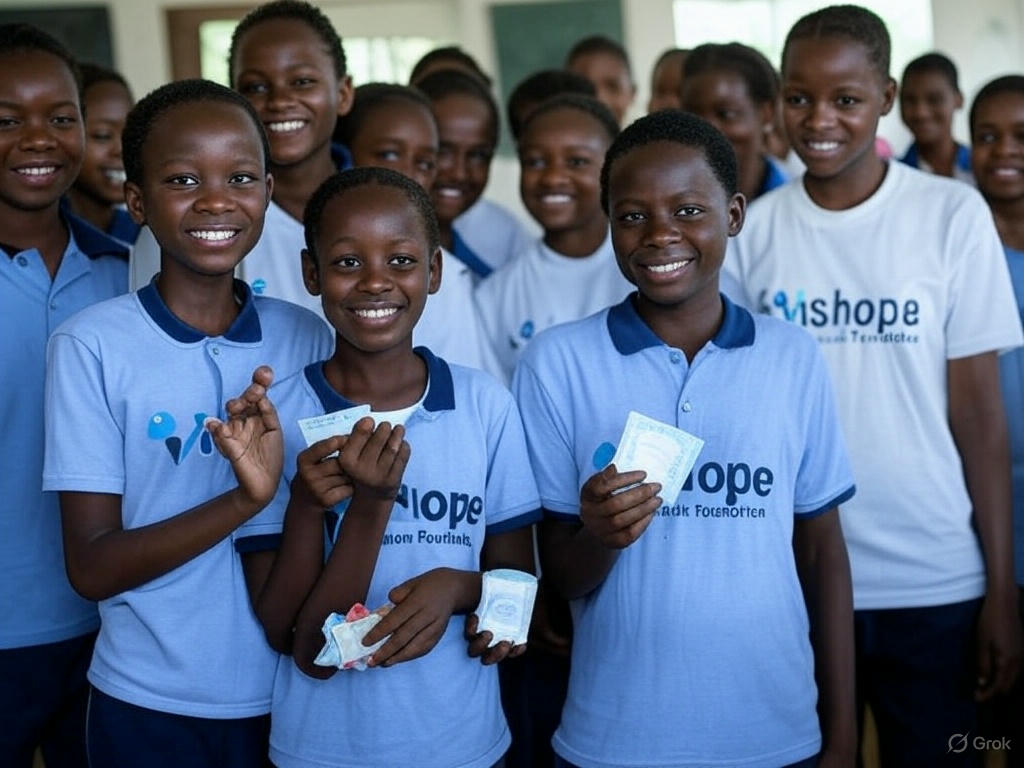
What sets Vishope Foundation apart is our hybrid approach: leveraging charity principles to drive NGO outcomes. Here’s how we’re making this initiative a reality in Oyam District:
- Strategic Partnerships for Supply Chain Efficiency
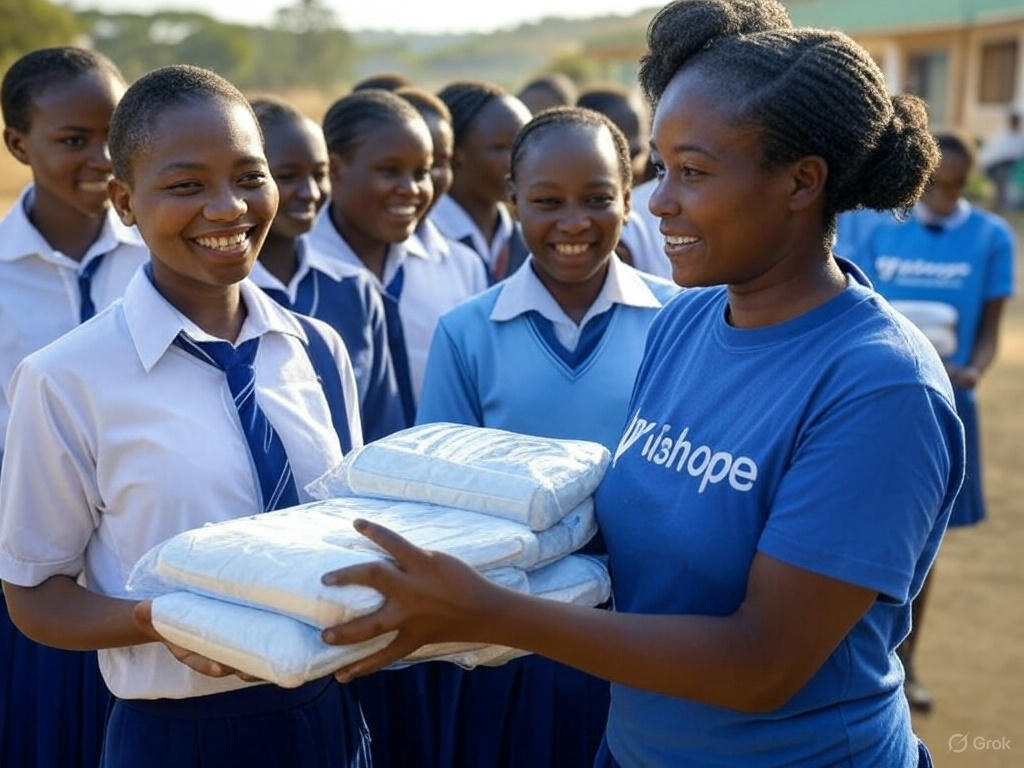
We’ve partnered with local and regional manufacturers of affordable, eco-friendly sanitary napkins to secure bulk supplies of training materials at a reduced costs and to teach our young girls at school and young mothers on how to make their own sanitary napkins. By negotiating favourable terms and prioritizing biodegradable products, we’re not only keeping expenses low but also aligning with environmental sustainability—a core value of Vishope Foundation. These partnerships ensure a steady pipeline of products tailored to the needs of rural school girls, with an initial procurement goal of 60,000 sanitary napkins for Year 1. - Community-Driven Distribution Network
Rather than relying solely on external intervention, we’re empowering local communities to take ownership of the initiative. Vishope Foundation is training female teachers, community health workers, and parent volunteers to serve as Materials-distribution coordinators in schools. This decentralized model reduces logistical costs, builds trust, and ensures that training reach the girls who need them most. Each school will have a “Menstrual Health Champion”—a trained advocate responsible for managing stock, educating students, and destigmatizing menstruation including rural young mothers. - Education as the Cornerstone
Access to sanitary napkins is only half the battle. Many girls in Oyam lack basic knowledge about menstrual hygiene due to cultural taboos and limited resources. Our initiative includes workshops led by health experts and peer educators, covering topics like proper pad usage, hygiene practices, and reproductive health. By integrating these sessions into the school curriculum, we’re fostering a generation of informed, confident young women who can break the silence around menstruation. - Sustainable Funding Model
As a business-oriented NGO, we’re committed to financial sustainability. The initial phase of this project is funded through a combination of donor contributions, corporate sponsorships, and grants from international development partners. However, we’re also exploring a micro-enterprise component: training local women’s groups to produce low-cost sanitary napkins using simple, manual machines. This not only creates jobs but also generates revenue to reinvest into the program, reducing dependency on external funding over time.
The Numbers: Measuring Impact and ROI
At Vishope Foundation, we believe in accountability and results. Here’s what our initiative promises to deliver in Oyam District:
- Reach: 5,000 girls and young mothers across 20 schools in Year 1, with plans to scale to 15,000 girls/young mothers by Year 3.
- Supply: 12 sanitary napkins produced per girl each year (one pack per month), totalling 60,000 units annually.
- Cost Efficiency: By leveraging bulk procurement and local distribution, they will be selling their own products to local shops and around at affordable price of 1,000/- for their own financial support—a fraction of commercial retail prices.
- Educational Impact: A projected 20% reduction in absenteeism, translating to an additional 15-20 school days per girl per year.
- Health Outcomes: Lower incidence of infections and improved overall well-being, as reported by community health workers.
For our donors and partners, this isn’t just charity—it’s an investment with a tangible return: healthier, educated girls who can contribute to their communities and the economy in the long run.
Why Oyam? A Community Ready for Change
Oyam District is a microcosm of rural Uganda’s challenges and opportunities. With a population of over 400,000, it’s predominantly agrarian, with limited access to healthcare and sanitation infrastructure. Yet, it’s also home to resilient communities eager for progress. Our baseline assessments, conducted in collaboration with local leaders and schools, revealed overwhelming support for this initiative. Headteachers reported that girls often borrow rags from friends or skip school entirely during their periods, while parents expressed frustration at their inability to afford pads. Vishope Foundation’s intervention is timely, filling a critical gap and amplifying the community’s own desire for change.
Breaking the Cycle of Poverty Through Empowerment
The ripple effects of this initiative extend far beyond the classroom. When girls stay in school, they’re more likely to graduate, secure better livelihoods, and delay early marriage and childbirth—key drivers of poverty in rural areas like Oyam. By providing sanitary napkins and education, we’re not just addressing a monthly need; we’re equipping girls with the tools to break generational cycles of disadvantage. This aligns with Vishope Foundation’s broader vision of empowering communities through sustainable, dignity-centered solutions.
Join Us: Be Part of the Solution
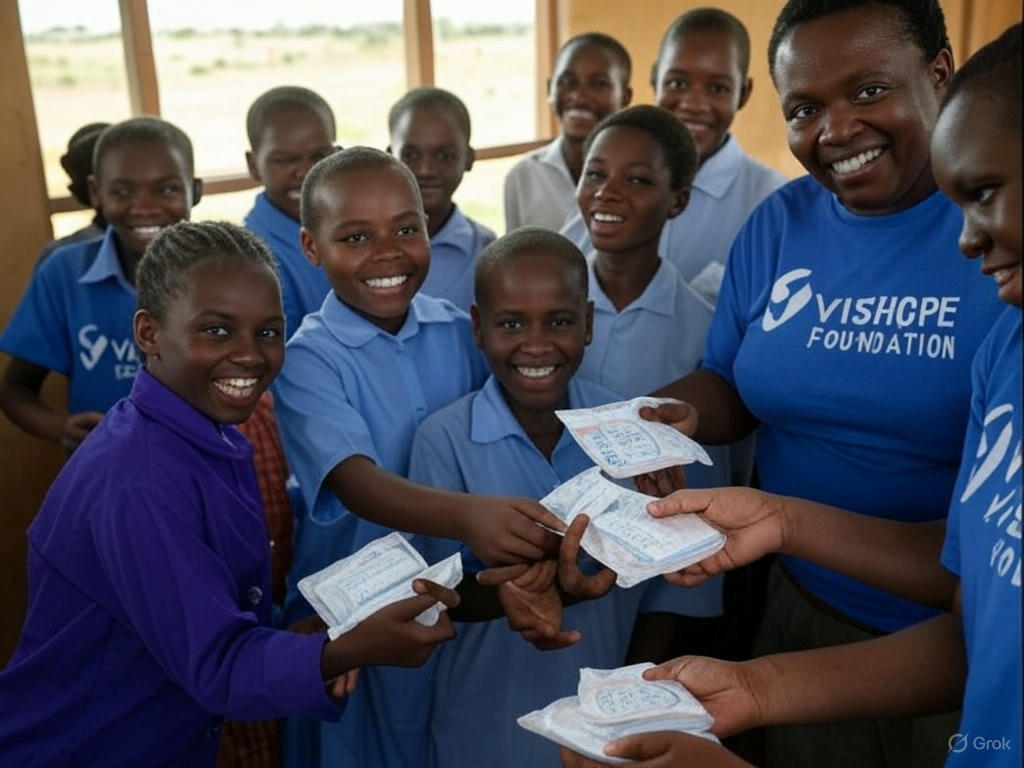
Vishope Foundation’s Sanitary Napkins Supply Initiative is more than a project—it’s a movement to redefine what’s possible for rural school girls in Oyam District. But we can’t do it alone. We’re calling on businesses, philanthropists, and everyday changemakers to join us in this transformative effort:
- Corporate Partners: Sponsor a school or fund a year’s supply of sanitary napkins. Your CSR dollars will deliver measurable impact and brand visibility.
- Individual Donors: A contribution of $10 can provide a girl with sanitary napkins for five months—keeping her in school and on track.
- Volunteers: Lend your skills in fundraising, logistics, or education to amplify our reach.
Together, we can ensure that no girl in Oyam District misses out on her education—or her future—because of something as fundamental as menstruation.
Looking Ahead: A Scalable Model for Impact
While Oyam District is our starting point, Vishope Foundation envisions this initiative as a blueprint for replication across Uganda and beyond. By refining our approach—optimizing costs, strengthening local production, and deepening community engagement—we aim to scale this model to other rural regions facing similar challenges. Our ultimate goal? To make period poverty a thing of the past, one girl, one school, one community at a time.
At Vishope Foundation, we’re not just ensuring sanitary napkins production knowledge—we’re supplying hope, opportunity, and a pathway to a brighter future. Join us as we empower the girls and young mothers of Oyam District to rise above limitations and claim their rightful place in the world.
For more information or to get involved, contact us at admin@vishope.org

Leave a comment